
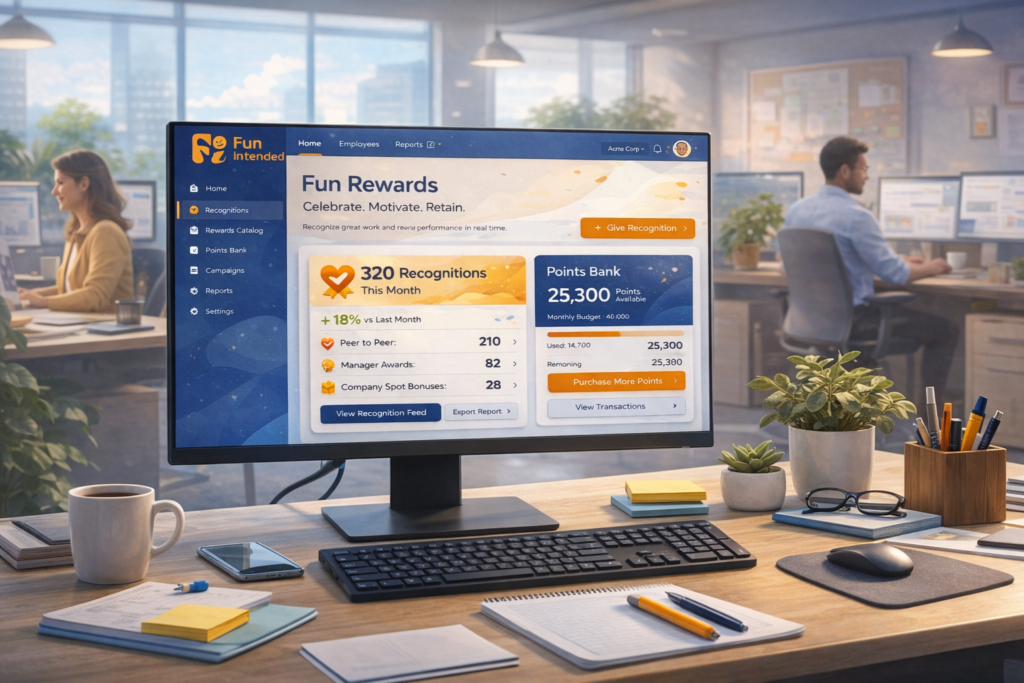
Employee recognition is a critical driver of engagement, retention, and performance. As workplaces become more competitive and employee expectations continue to rise, organizations are turning to an employee recognition platform to create consistent, meaningful recognition experiences at scale.
When recognition is done right, it strengthens culture, improves morale, and directly impacts business outcomes.
What Is an Employee Recognition Platform?
An employee recognition platform is a centralized system that allows organizations to celebrate employee contributions in real time. It provides a structured way to recognize achievements, reward performance, and reinforce company values across teams.
Instead of relying on occasional praise or inconsistent feedback, companies can use a platform to make recognition part of everyday work.
Most platforms include features such as:
Peer to peer recognition
Manager driven recognition
Points based rewards systems
Leaderboards and visibility tools
Integration with company values and goals
These tools help ensure that recognition is not overlooked or unevenly distributed.
Why Recognition Matters More Than Ever
Employees want to feel valued. Recognition is one of the simplest and most effective ways to meet that need.
According to Gallup Woplace Research, employees who receive regular recognition are more engaged and more likely to stay with their organization. Recognition creates a sense of belonging and reinforces the idea that individual contributions matter.
Lack of recognition, on the other hand, is one of the most common drivers of disengagement and turnover.
The Business Impact of an Employee Recognition Platform
Recognition does more than improve morale. It drives measurable business results.
Organizations that prioritize recognition often see:
Higher employee engagement
Lower turnover rates
Increased productivity
Stronger collaboration across teams
Research highlighted by SHRM shows that recognition programs play a key role in improving employee satisfaction and retention.
When employees feel appreciated, they are more likely to go above and beyond in their roles.
Consistency Is the Difference Maker
One of the biggest challenges with recognition is consistency.
Without a system in place, recognition often depends on individual managers. Some employees receive frequent praise, while others are overlooked. This inconsistency can lead to frustration and disengagement.
An employee recognition platform solves this by creating a structured and visible system where recognition happens regularly and fairly.
Recognition becomes part of the culture rather than an occasional event.
Connecting Recognition to Company Values
Recognition is most powerful when it is tied to what the organization stands for.
Instead of generic praise, recognition can highlight behaviors that align with company values such as teamwork, innovation, or accountability.
This reinforces the behaviors that drive success and helps employees understand what is expected of them.
A rewards and recognition platform makes it easy to align recognition with company goals and values.
When employees see their work connected to a larger purpose, engagement increases.
Real Time Recognition Drives Momentum
Timing matters in recognition.
When recognition is delayed, its impact is reduced. When it happens in real time, it reinforces behavior immediately and creates momentum.
An employee recognition platform allows managers and peers to recognize contributions as they happen, rather than waiting for formal reviews or milestones.
This keeps energy high and encourages continuous performance.
Data and Insights Improve Recognition Strategy
Modern recognition platforms do more than deliver praise. They provide data.
Organizations can track:
Who is giving and receiving recognition
Which teams are most engaged
How recognition impacts performance
Trends over time
These insights help leaders refine their approach and ensure recognition efforts are effective.
This aligns closely with broader data driven strategies, where engagement is measured and improved through analytics.
Integrating an Employee Recognition Platform With Other Engagement Tools
Recognition is powerful on its own, but it becomes even more effective when combined with other engagement strategies.
For example:
Pairing recognition with training reinforces learning and growth
Connecting recognition to mentorship highlights development progress
Adding gamification introduces fun and friendly competition
Organizations often combine these elements into a unified system that enhances the overall employee experience.
A centralized engagement hub can bring these tools together for better visibility and impact.
An Employee Recognition Platform Supports Retention and Growth
Retention is one of the biggest challenges facing organizations today.
Employees who feel unappreciated are far more likely to leave, even if other aspects of the job are positive.
Recognition helps address this by creating a culture where employees feel seen, valued, and motivated to stay.
According to McKinsey research on employee experience, organizations that invest in employee experience see stronger retention and performance outcomes.
Recognition is a foundational part of that experience.
Building a Culture of Appreciation
An employee recognition platform is not just a tool. It is a strategy.
To be effective, organizations should:
Encourage recognition at all levels
Make recognition specific and meaningful
Tie recognition to values and goals
Celebrate both small wins and major achievements
Use data to continuously improve
When recognition becomes part of everyday work, it transforms the culture.
The Future of Recognition
As workplaces continue to evolve, recognition will play an even greater role in engagement.
Employees expect more than compensation. They expect connection, appreciation, and purpose.
An employee recognition platform provides a scalable way to meet those expectations while driving real business results.
Organizations that prioritize recognition are not just improving morale. They are building stronger teams, better cultures, and more successful businesses.