
Today’s workplace is noisy, fast, and full of competing demands on our attention. Amid all that, one part of the brain plays a critical role in deciding what gets noticed and what gets ignored. That brain filter is called the Reticular Activating System (RAS) and gamification is one way to open the filter up.
What Is the Reticular Activating System (RAS)?
The Reticular Activating System is a network of neurons located in the brainstem that acts as the brain’s gatekeeper for attention. It filters incoming sensory information and determines what is important enough to reach our conscious awareness, while irrelevant data is tuned out. In simple terms, it answers the question: What matters right now? This system is essential for focus, wakefulness, and prioritizing stimuli so the brain can pay attention to what it needs to act on.
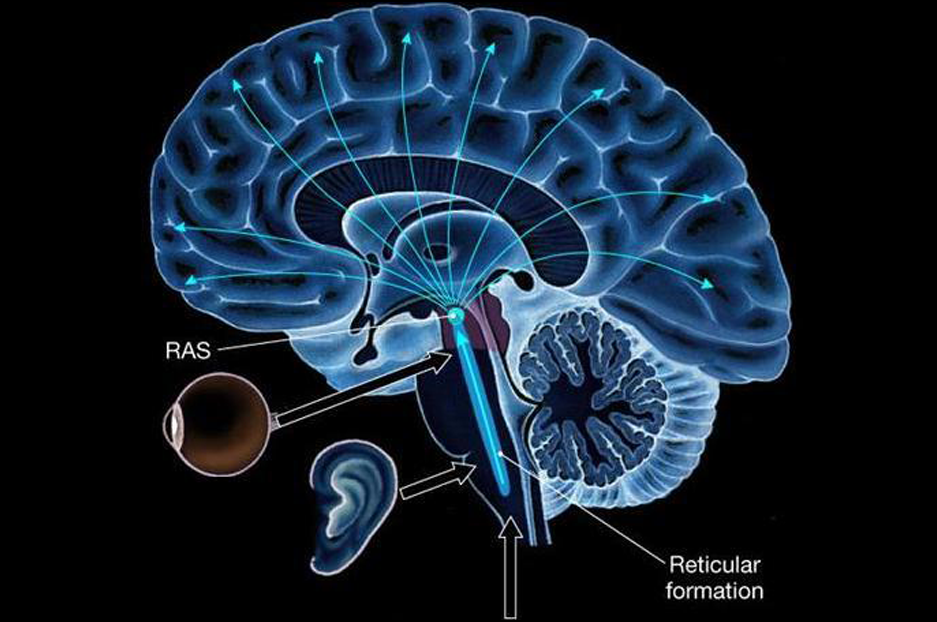
Imagine standing in a crowded room with dozens of conversations happening at once. Most of that sound fades into the background. But if someone calls your name, your attention snaps to it instantly. That shift is the RAS at work, prioritizing what’s meaningful and filtering out the rest.
Why This Matters in the Workplace
When the RAS is engaged, focus sharpens, motivation increases, and learning improves. When it’s not engaged, distractions win, productivity drifts, and important tasks feel like a slog.
That’s where intelligently designed gamification platforms come in.
Gamification and the Brain: How Game Mechanics Activate Focus
Gamification is the integration of game-like elements (such as progress indicators, points, badges, leaderboards, challenges, and feedback loops) into non-game environments like work tasks, training programs, or performance dashboards.
These elements align with how the RAS evaluates relevance:
Clear Goals
Games provide clear objectives, telling the brain exactly what success looks like and what to pay attention to.
Immediate Feedback
Points, badges, and progress bars deliver instant feedback. The brain interprets this as meaningful information, reinforcing focus and sustaining motivation.
Novelty and Challenge
New challenges, levels, and shifting goals keep the brain engaged because the RAS is tuned to notice novelty and change.
Emotional Investment
Even small game wins trigger emotional responses, releasing neurotransmitters associated with reward and satisfaction.
This combination tells the brain, “This matters,” and the RAS shifts attention accordingly. That’s why work designed with these elements doesn’t require artificial effort to maintain focus. The focus happens naturally.
Gamification Improves Engagement, Learning, and Productivity
A growing body of research shows that gamifying workplace experiences leads to measurable improvements in key areas:
• Engagement increases significantly when gamification is applied. Studies show gamification can boost employee engagement by over 40% compared with non-gamified approaches.
• Productivity and knowledge retention improve. Workplace gamification has been linked with increased productivity and better learning outcomes when used in training and development programs.
• Motivation and job satisfaction rise. Research finds that applying gamification strategies enhances motivation, emotional engagement, and positive work behaviors.
• Engagement and retention gains extend beyond training. Some sources indicate that gamified experiences can boost overall user engagement by as much as 100%-150% compared to traditional methods.
These benefits occur because gamification taps into intrinsic human psychological drivers (achievement, progress, social connection) and aligns them with workplace goals.
Gamification Platforms Make Engagement Scalable
Adding gamification to your culture in an ad-hoc way (points here, badges there) won’t move the needle unless it is systematic, centralized, and visible. That’s where gamification platforms make a difference.
A gamification platform provides a central hub where:
- Goals are visible to every participant
- Progress and feedback are automatic, not manual
- Performance data ties directly to business KPIs
- Achievements and recognition are tracked consistently
- Friendly competition and social interaction are encouraged
By making the experience visible and consistent instead of scattered across different tools, gamification becomes part of the workflow, not an add-on.
Platforms also allow leadership to:
- Measure engagement and participation
- Align rewards with desired behaviors
- Monitor trends and intervene when momentum lags
Work becomes not just about completing tasks, but about progressing, improving, and being seen doing it.
Why Gamification Is Strategic
Some critics dismiss gamification as a novelty or “worky games.” But the neuroscience and research tell a different story. Gamification enhances learning, builds focus, and creates positive reinforcement loops. It does not distract; it harnesses the brain’s natural attention systems for productive outcomes.
When gamification works well:
- Employees understand expectations clearly
- Progress feels visible and meaningful
- Feedback is timely, not delayed
- Improvement feels rewarding, not tedious
This alignment between brain science and experience design elevates morale, sharpens focus, and improves KPIs like training completion, performance outcomes, and retention.
The Future of Employee Engagement
Work doesn’t need to feel exhausting to be effective. When work is designed in ways that resonate with how the brain’s attention systems operate, engagement becomes natural.
Gamification is not about adding fun as a superficial layer. It’s about embedding motivation and meaning into everyday work, turning attention into action and engagement into growth.
What if fun wasn’t something added to work, but something that belonged there all along?