
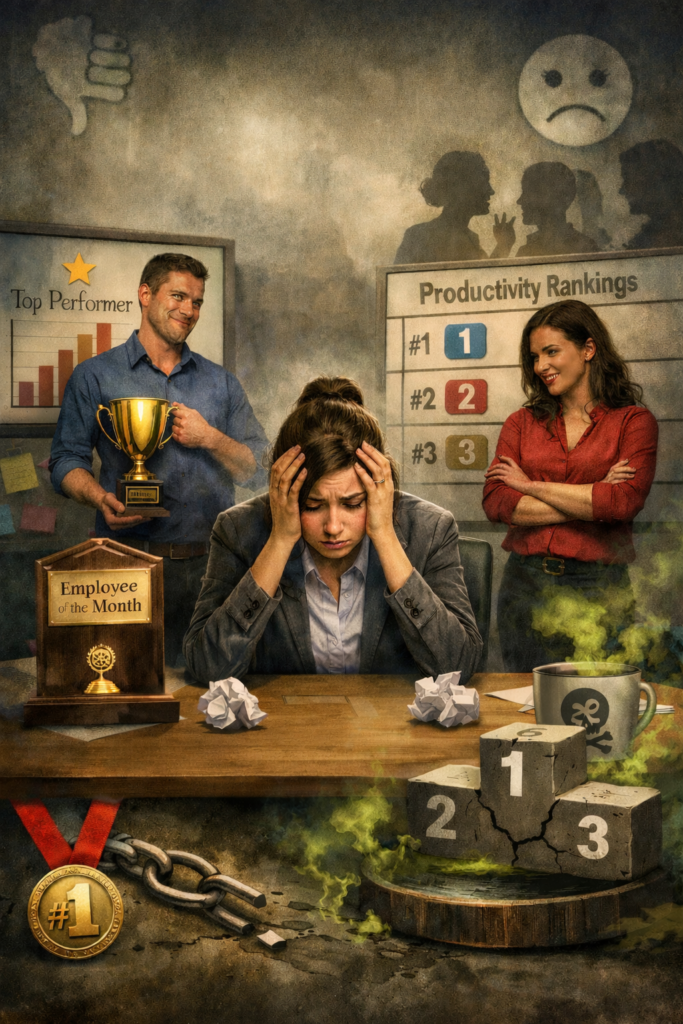
Healthy competition can drive innovation, performance, and growth. But when workplace competition turns into constant comparison, it can quickly turn toxic, quietly erode morale, damage trust, and increase employee turnover.
There’s a fine line between encouraging excellence and creating a culture where employees feel they are never good enough. When leaders consistently compare team members or publicly rank performance without context, what begins as motivation can quickly become toxic.
Understanding the difference between healthy competition and toxic workplace culture is essential for building high-performing teams.
The Psychology Behind Toxic Competition in the Workplace
Comparison is a natural human tendency. Psychologists refer to this as social comparison theory, the idea that individuals determine their own worth based on how they stack up against others. While some comparison can inspire improvement, constant unfavorable comparison damages self-esteem and motivation.
When leaders say things like “Why can’t you be more like them?” the message employees hear is not encouragement. It’s inadequacy.
Research consistently shows that environments high in social comparison increase stress and reduce psychological safety. The belief that it’s safe to take risks and speak up.
Without psychological safety, employees:
- Stop sharing creative ideas
- Avoid calculated risks
- Withhold feedback
- Protect themselves instead of collaborating
Over time, this reduces innovation and engagement.
When Toxic Competition Hurts Employee Engagement and Retention
Competition becomes toxic when it shifts from shared goals to personal rivalry. Instead of working together, employees focus on outperforming one another.
According to research from Gallup, highly engaged teams experience significantly lower turnover than disengaged teams.
However, engagement declines when employees feel undervalued or constantly compared to others.
Toxic competition can lead to:
- Increased burnout
- Decreased collaboration
- Lower job satisfaction
- Higher voluntary turnover
When employees believe their efforts will always be measured against someone else’s strengths, motivation fades. Instead of striving to grow, they begin protecting their status or disengaging entirely.
Why Public Comparison Undermines Performance
Some leaders use leaderboards or public performance comparisons to drive productivity. In certain environments, structured competition can work. But without balance, these tools create anxiety rather than motivation.
Research published in the Journal of Applied Psychology suggests that performance comparison systems can increase stress and reduce intrinsic motivation when employees feel the system is unfair or unattainable.
When motivation becomes fear-based instead of growth-based:
- Creativity declines
- Team cohesion weakens
- Short-term gains override long-term culture
Healthy competition should energize people, not make them feel defeated before they begin.
The Role of Psychological Safety in High-Performing Teams
High-performing teams are not built on rivalry.
Google’s Project Aristotle study found that psychological safety was the most important factor in team effectiveness.
When employees feel safe to contribute without fear of humiliation or comparison, they:
- Share ideas more freely
- Collaborate more openly
- Solve problems faster
- Take smart risks
Competition framed around shared success strengthens teams. Competition framed around personal comparison weakens them.
How Leaders Can Prevent Toxic Workplace Competition
Creating a healthy workplace culture doesn’t mean eliminating competition entirely. It means shifting the focus from comparison to growth.
Here are practical ways to encourage excellence without creating toxicity:
1. Reward Progress, Not Just Outcomes
Recognize improvement, effort, and learning instead of only the results. This builds confidence and encourages continuous development.
2. Celebrate Individual Strengths
Every employee brings unique skills to the table. Highlight those strengths instead of ranking employees against one another. Celebrating individual contributions and recognizing progress can reduce unhealthy comparison. Tools like employee rewards and recognition platforms help your team feel valued for what they uniquely bring.
3. Set Team-Based Goals
Shared KPIs foster collaboration. When teams win together, competition becomes collective rather than divisive.
4. Provide Private, Constructive Feedback
Coaching should focus on development, not comparison. Replace “Be more like them” with “Here’s how you can grow.” Structured mentorship opportunities, like those provided through an employee mentorship platform, shift focus from competition to growth and development.
5. Build Transparent and Fair Systems
If performance metrics are used, ensure they are clearly defined and attainable.
Turning Competition Into Healthy Motivation
Healthy competition should be rooted in employee engagement services that support growth, recognition, and collaboration. The most effective workplace cultures balance ambition with respect. They encourage high standards while honoring individuality.
Healthy competition:
- Encourages growth
- Builds accountability
- Strengthens team performance
Toxic competition:
- Breeds resentment
- Increases stress
- Drives disengagement
- Accelerates turnover
As a business owner or leader, the responsibility lies in shaping how competition is framed. The goal is not to eliminate standards. It’s to create an environment where people strive to improve because they feel supported, not because they fear falling behind.
The best teams thrive on mutual respect, shared goals, and a clear belief that everyone’s contribution matters.
When you replace constant comparison with intentional encouragement, you transform competition from a source of insecurity into a catalyst for growth.