
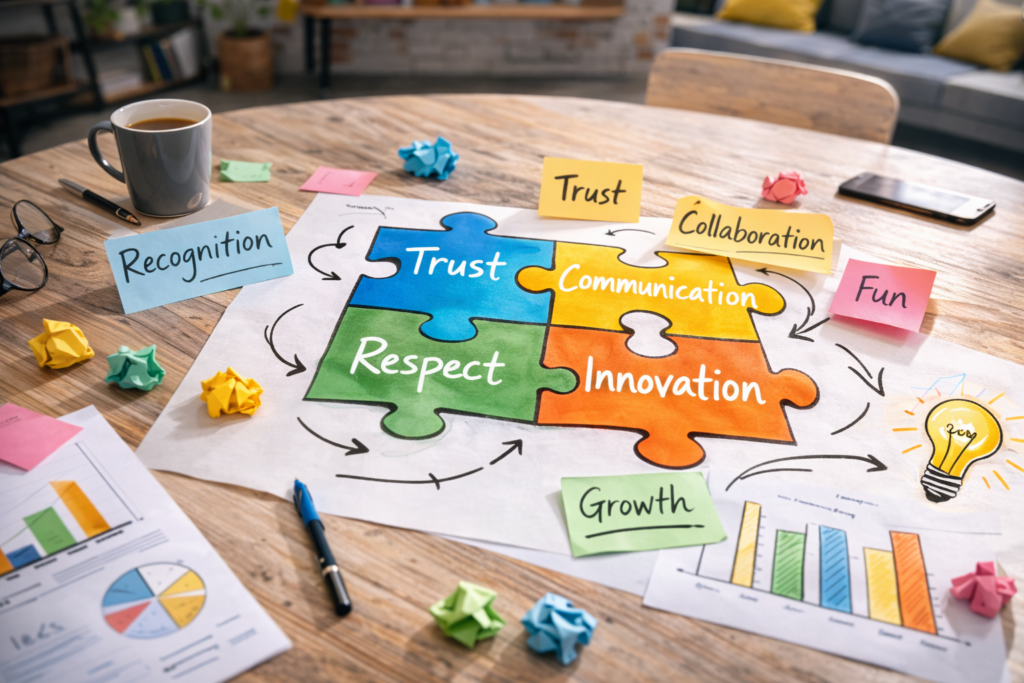
Authentic Leadership when it comes to employee engagement is often misunderstood. Many organizations believe engagement is built through policies, processes, and performance metrics alone. While structure is important, true employee engagement grows in environments where leaders allow space for personality, authenticity, and human connection.
The most engaged workplaces are not rigid. They are disciplined but flexible. Structured but human. Goal oriented but energized by creativity.
Balancing structure with authenticity is what turns engagement from a short term initiative into a sustainable cultural advantage.
Why Authentic Leadership Requires More Than Policies
Employee engagement is defined by emotional commitment and caring about the outcome.
Gallup research consistently shows that highly engaged teams experience higher productivity, improved profitability, and lower turnover compared to disengaged teams.
However, engagement cannot be forced through rules alone. Employees do not become invested because a handbook tells them to. They become invested when they feel:
- Trusted
- Respected
- Supported
- Included
Rigid structures without human connection often lead to compliance rather than commitment.
The Balance Between Freedom and Accountability
Every organization needs structure. KPIs measure progress, clear expectations define performance, and policies protect fairness.
But within that framework, there must be room for:
- Creativity
- Humor
- Open dialogue
- Personality
- Collaboration
Harvard Business Review has highlighted that psychological safety plays a major role in team performance. Teams that feel safe to speak up and express themselves outperform those operating under fear or excessive rigidity.
Freedom without accountability creates chaos. Accountability without freedom creates disengagement.
The healthiest cultures operate in the space between.
Authentic Leadership Drives Sustainable Engagement
Engagement efforts become sustainable when leadership models authenticity.
Employees respond to leaders who:
- Communicate transparently
- Show personality
- Admit mistakes
- Celebrate wins
- Connect beyond performance metrics
According to research published by the Center for Creative Leadership, authentic leadership increases trust and team effectiveness.
When leaders loosen the rigidity while maintaining standards, teams respond with greater ownership and collaboration.
Engagement Thrives When the Entire Organization Buys In
Employee engagement can’t be an HR initiative alone. It must be embraced from the top down.
When executives, managers, and frontline employees share the same mindset about culture, the results compound.
Benefits of a balanced engagement culture include:
- Higher collaboration
- Increased innovation
- Stronger retention
- Improved morale
- Greater discretionary effort
Companies that invest intentionally in engagement often use tools such as:
- An employee engagement hub to centralize communication and recognition
- An employee rewards and recognition platform to reinforce behaviors
- An employee gamification platform to make goals visible and motivating
- A learning management system platform to support growth
- A mentorship platform to help employees learn from one another
Structure supports performance. Personality sustains it.
Innovation Requires Comfort and Trust
Innovation doesn’t thrive in overly rigid environments. It thrives where people feel comfortable contributing ideas.
Google’s Project Aristotle found that psychological safety was the most important factor in high performing teams.
When employees can be themselves while still aiming for excellence, they contribute more freely.
That is where culture becomes a competitive advantage.
Culture as a Long Term Performance Strategy
Employee engagement is not about being casual or eliminating standards. It is about aligning structure with humanity.
The companies that succeed long term are those that:
- Set clear expectations
- Reinforce accountability
- Encourage individuality
- Celebrate effort
- Create connection
It is a fine line to walk. But organizations that get it right build cultures that are resilient, innovative, and performance driven.