
How to Gamify Onboarding Without It Feeling Gimmicky

Most onboarding isn’t working. Per Gallup, only 12% of employees strongly agree their organization onboards well. Per BambooHR’s First Day Fog report, 32% of new hires leave onboarding disappointed. For Gen Z, that figure is 40%. This is why it’s becoming customary to gamify onboarding. Per Insight Global’s 2025 research, 22% of workers left a job within 90 […]
How AI Upskilling Became Every Manager’s Training Problem

Most of the AI conversation at work focuses on tools. Which ones to adopt, how fast to move, what competitive risk comes from falling behind. The harder question isn’t about the technology. It’s about the people using it, and their AI upskilling. Per Gallup’s May 2026 tracking, 52% of U.S. employees use AI at work. 15% […]
The Frontline Worker Engagement Gap is Costing You a Fortune

There are 2.7 billion deskless workers globally. Nurses, warehouse operators, store associates, drivers, construction crews, and hospitality teams keep every industry running. Most employee engagement programs were never built for any of them. Traditional engagement platforms assume workers have a desk, a corporate email, and regular access to company systems. Frontline workers rarely have any […]
Employee Engagement Trends for the Second Half of 2026
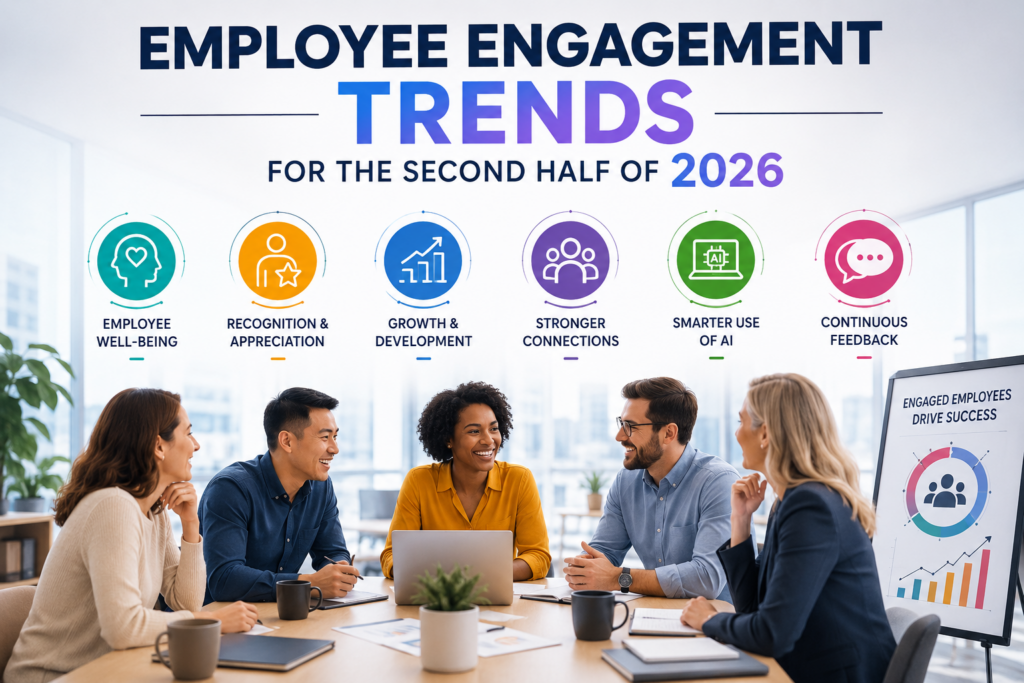
Global employee engagement fell to 20% in 2025. These employee engagement trends mark the second consecutive year of decline and the lowest level since 2020, per Gallup’s State of the Global Workplace 2026 report. No region of the world improved. The decline cost the global economy an estimated $10 trillion in lost productivity. The second half […]
How mentorship closes the skills gap faster than formal training

41% of HR leaders believe a lack of employee development initiatives is driving their skills gap. Only 33% of employees think their employers are actually fulfilling their responsibility to upskill them. According to MentorCliq’s 2026 mentoring and skills gap statistics, 97% of employers and 96% of employees agree that upskilling is essential, yet 40% of workers […]
Why Microlearning Sticks Better Than Traditional Training

Hermann Ebbinghaus mapped the problem in the 1880s, and modern research confirms it holds. People forget approximately 90% of information they receive within a week of learning it. Without reinforcement, the knowledge from a full-day training session begins evaporating within 24 hours. It’s for this exact reason that microlearning is growing in popularity. Traditional training […]
The Evolution of LMS Platforms: Transforming Employee Training

For most of the 20th century, transforming employee training meant one thing: putting people in a room with an instructor and hoping the information stuck. The idea that structured training could improve workplace performance dates back to Frederick Winslow Taylor, whose 1911 work on scientific management argued that teaching employees to do their tasks correctly […]
Training Prevents Quitting: How to Keep Employees Engaged

Quiet quitting does not mean someone is lazy. It means someone stopped caring, and usually for a specific reason. The employee still shows up. They still complete assigned tasks. They just stopped going the extra mile because nobody seemed to notice when they did. Over time, that feeling compounds into a kind of emotional checkout […]
Career Pathing Framework That Keeps Employees Around

People leave futures they can’t picture. That’s the part most organizations miss. When an employee starts updating their LinkedIn profile, or scheduling mysterious lunch appointments, the instinct is to ask what went wrong recently. But the real question is usually what they stopped believing months ago. A Pew Research survey found that 63% of individuals […]
Real Stats That Prove Gamification Improves Company Revenue
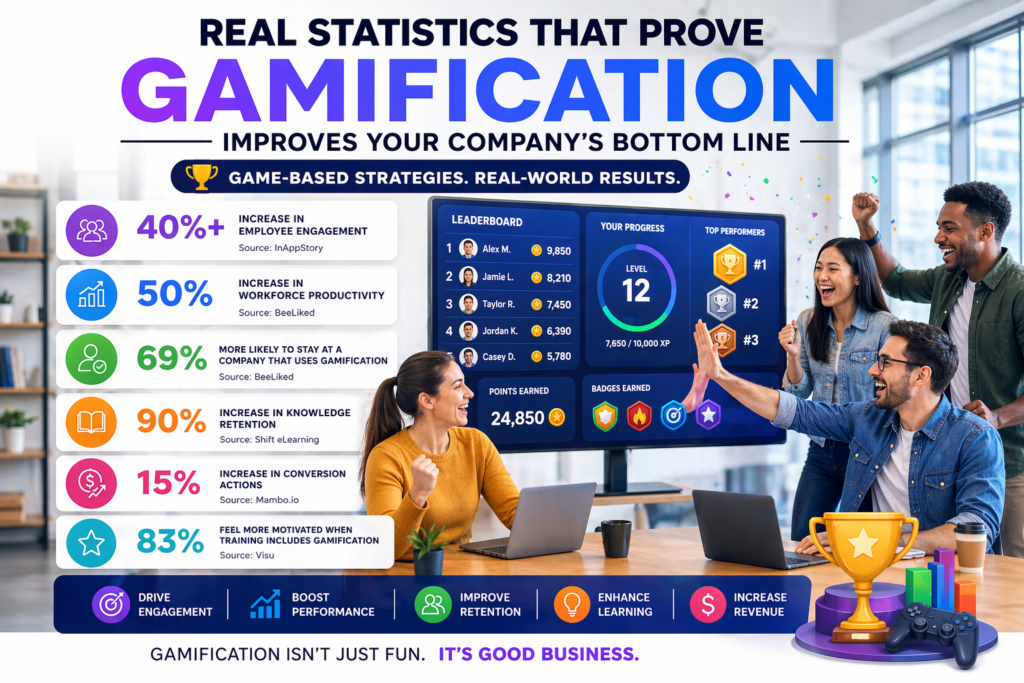
Gamification has quietly become one of the most effective ways to improve employee performance and engagement. What used to feel like a novelty is now backed by real data that shows measurable impact across entire organizations. Bottom line: Gamification improves company revenue. For example, a study highlighted by AmplifAI found that companies implementing gamification have seen engagement […]