
Employee training is one of the most important investments a company can make. Well trained employees perform better, make fewer mistakes, and feel more confident in their roles. Yet many organizations struggle with a common challenge: getting employees to actually complete training programs.
Traditional training methods often feel repetitive or disconnected from day to day work. Employees may start courses with good intentions but lose motivation before finishing them. When training feels like a chore rather than an opportunity, completion rates naturally decline.
Gamification offers a powerful solution.
By introducing game elements such as points, achievements, progress tracking, and friendly competition, companies can transform training into an engaging experience that employees genuinely want to participate in.
Why Training Completion Rates Matter
Training completion is not simply a checkbox for compliance. It directly impacts how well employees can perform their jobs and contribute to the organization.
Incomplete training often leads to inconsistent knowledge, reduced productivity, and avoidable mistakes. It can also limit career development opportunities for employees who are trying to grow within the company.
Research from the Association for Talent Development shows that organizations that invest in strong training programs generate higher revenue per employee compared to companies that invest less in learning and development.
When employees complete training programs, they build the skills needed to succeed. When they do not complete training, those opportunities are lost.
This is why improving completion rates should be a priority for any organization that values employee development.
Why Traditional Training Often Fails
Many workplace training programs struggle because they rely on passive learning methods. Long presentations, static videos, and large blocks of reading can make it difficult for employees to stay focused.
Without clear progress indicators or incentives, employees may not feel motivated to continue.
Modern workplaces are filled with distractions. Emails, meetings, and deadlines compete for employees’ attention throughout the day. When training lacks engagement, it quickly falls to the bottom of the priority list.
Gamification addresses this problem by activating the brain’s natural motivation systems.
How Gamification Improves Employee Training
Gamification introduces elements commonly found in games to make learning more interactive and rewarding.
These elements can include:
Points for completing lessons
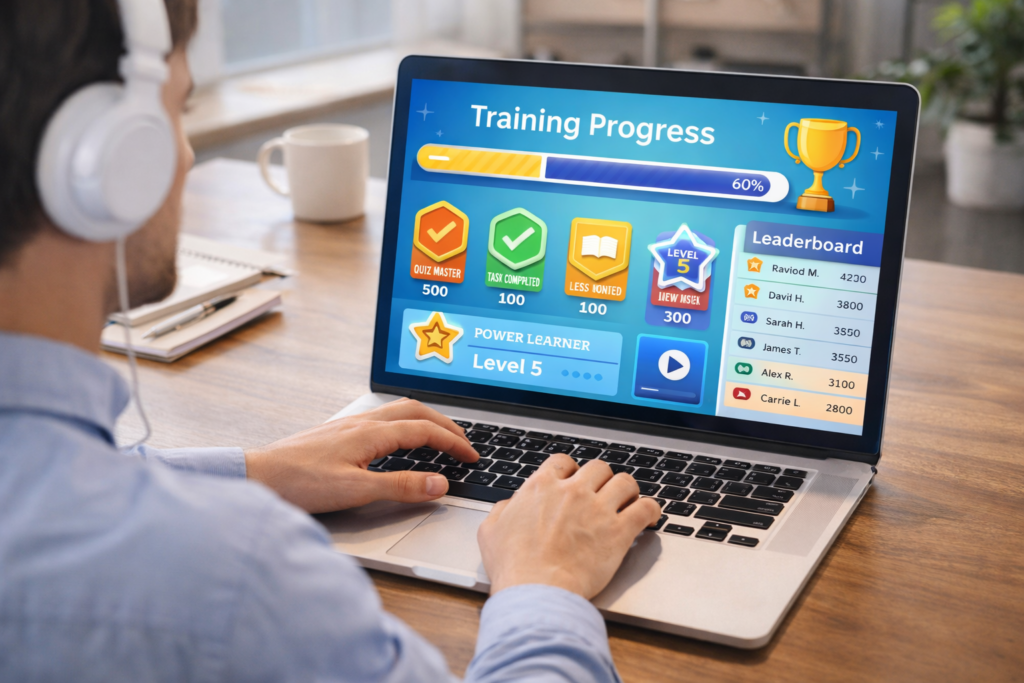
Progress bars that show how far employees have come
Badges or achievements for reaching milestones
Leaderboards that encourage friendly competition
Challenges that reward consistent participation
These features provide immediate feedback, which helps employees stay motivated as they move through training modules.
Research from TalentLMS found that 83% of employees who receive gamified training feel more motivated, while 89% say gamification makes them more productive at work.
When training feels rewarding and interactive, employees are much more likely to complete it.
Gamification and the Brain’s Attention System
Gamification improves employee training because it aligns with how the brain naturally processes information.
Clear goals, progress indicators, and rewards trigger the brain’s attention system, encouraging employees to stay focused on tasks that produce visible progress.
For example, seeing a progress bar move from 40 percent to 60 percent completion provides immediate feedback that the employee is moving closer to a goal.
Small rewards along the way reinforce participation and help build momentum.
This is why gamified systems often lead to higher engagement compared to traditional learning formats.
Gamified Training Works Best With a Learning Platform
While gamification elements can be added to individual training programs, they are most effective when integrated into a centralized learning environment.
A structured learning platform allows companies to track progress, assign courses, and monitor completion rates while incorporating gamified elements that motivate participation.
For example, organizations often use a learning management system platform to deliver training modules while tracking employee progress across the entire company.
When gamification features are integrated into an LMS platform, employees can see their progress in real time and stay motivated to continue learning.
Recognition and Rewards Reinforce Training Success
Recognition plays an important role in reinforcing learning behaviors.
When employees complete training milestones, acknowledging their achievements encourages continued participation.
Recognition can include public acknowledgment, digital badges, or tangible rewards that celebrate progress.
Organizations often combine gamified learning with employee rewards and recognition programs to celebrate achievements and encourage ongoing development.
When employees see their efforts recognized, training becomes more meaningful and engaging.
Mentorship Can Strengthen Gamified Learning
Another powerful way to support training completion is by combining gamification with mentorship.
Mentors can help employees apply what they learn in training modules to real world scenarios. This guidance reinforces learning and increases confidence.
Companies can support this approach through structured mentorship platforms that connect employees with experienced mentors who can guide their development.
When mentorship and training work together, employees gain both knowledge and support.
Gamification Encourages Continuous Learning
One of the biggest benefits of gamified training is that it encourages continuous learning.
Instead of treating training as a one time event, gamification turns development into an ongoing experience. Employees continue earning points, reaching milestones, and progressing toward new goals.
This creates a culture where learning becomes part of daily work rather than an occasional requirement.
Organizations that prioritize continuous learning often experience stronger engagement and improved retention.
According to LinkedIn’s Workplace Learning Report, 94% of employees say they would stay longer at a company that invests in their career development.
Gamification helps make that development both visible and motivating.
Turning Training Into an Experience Employees Enjoy
Employee training should not feel like a burden. When designed thoughtfully, it can become one of the most engaging aspects of the workplace.
Gamification improves employee training from a passive activity into an interactive experience that encourages participation and progress.
By combining gamified elements with learning platforms, recognition programs, and mentorship opportunities, organizations can dramatically improve training completion rates while strengthening employee engagement.
The result is a workforce that is not only better trained, but also more motivated to keep learning and improving.
And when employees grow, the entire organization grows with them.