
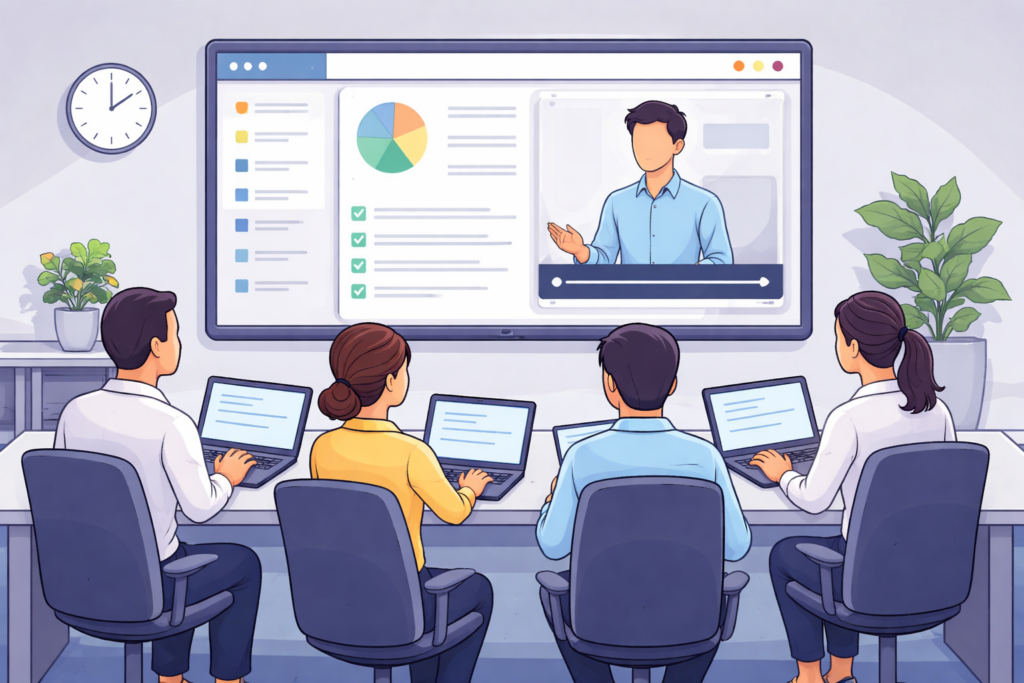
Employee training has always been essential to business success. Yet for many organizations, managing training and upskilling programs can quickly become complicated. Paper manuals, scattered documents, inconsistent onboarding, and informal knowledge transfer often lead to confusion and uneven results. Employees may receive different levels of instruction depending on who trains them, and tracking progress becomes nearly impossible. This is where a Learning Management System (LMS Platform) can transform the way businesses approach employee development.
An LMS platform simplifies employee training by centralizing learning resources, standardizing instruction, and providing clear visibility into employee progress. Instead of treating training as an occasional event, companies can create an organized system that supports continuous learning and professional growth.
Centralizing Training Materials in One Place With an LMS Platform
One problem is that training materials often exist across multiple locations, including shared drives, emails, printed manuals, and individual team members’ notes. This fragmentation makes it difficult for employees to know where to find the information they need.
An LMS platform solves this problem by placing all training materials in one centralized platform. Courses, videos, documents, and assessments can all live within a single system that employees can access whenever they need guidance. This ensures that everyone receives the same information and eliminates confusion about which resources are current.
Centralized training also allows leaders to update materials quickly. When processes change or new policies are introduced, the LMS can be updated immediately so every employee sees the most accurate information.
Creating Consistent Training Across the Organization
Consistency is one of the most important benefits of using an LMS. Without a structured system, training often varies depending on the department or the individual responsible for onboarding new employees. Some workers receive thorough instruction, while others learn through trial and error.
A Learning Management System standardizes the training experience. Every employee can follow the same structured learning path, ensuring they develop the knowledge and skills required for their role. Consistency improves performance, reduces mistakes, and strengthens operational efficiency.
When training is structured and repeatable, companies create a stronger foundation for growth.
Making Onboarding More Efficient Using an LMS Platform
Onboarding new employees is one of the most important stages in the training process. The first few weeks often determine whether a new hire feels confident and engaged or overwhelmed and uncertain.
An LMS makes onboarding easier by providing a clear roadmap for new employees. Instead of receiving large amounts of information all at once, new hires can complete structured training modules that introduce them to company policies, procedures, and expectations step by step.
This approach improves learning retention and helps employees reach productivity faster. According to research from SHRM, effective onboarding can improve employee retention and help new hires become productive more quickly.
When onboarding is structured through an LMS platform, businesses create a smoother transition for new employees and a stronger start to their careers within the organization.
Tracking Training Progress and Performance
Another major advantage of an LMS is visibility. Traditional training methods often provide little insight into whether employees have actually completed or understood their training materials.
Learning management systems provide built-in tracking and reporting features. Managers can see which courses employees have completed, how long they spent on training modules, and how they performed on assessments.
This data helps leaders identify skill gaps and provide additional support where needed. It also ensures that compliance training, certifications, and professional development requirements are completed on schedule.
Tracking progress turns training into a measurable business function rather than a guessing game.
Supporting Continuous Learning and Career Development
Modern employees want more than a job. They want opportunities to grow and improve their skills. Companies that provide learning opportunities often experience stronger engagement and retention.
According to LinkedIn’s Workplace Learning Report, 94% of employees say they would stay longer at a company that invests in their career development.
An LMS platform makes continuous learning possible by offering employees access to training at any time. Instead of waiting for scheduled workshops or seminars, employees can build skills at their own pace.
This flexibility encourages a culture of learning where employees actively pursue improvement rather than passively waiting for instruction.
Making Training Scalable as Your Business Grows
As organizations expand, training becomes more difficult to manage manually. What works for a small team quickly breaks down when new employees join the company across multiple departments or locations.
An LMS platform allows businesses to scale their training programs without increasing administrative complexity. Once courses are created, they can be delivered to hundreds or even thousands of employees with minimal additional effort.
This scalability is particularly valuable for companies experiencing rapid growth, opening new offices, or supporting remote teams.
Digital learning platforms ensure that every employee receives the same quality training regardless of location.
Improving Employee Engagement Through Interactive Learning
Modern LMS platforms often include interactive features that improve the training experience. Video lessons, quizzes, progress tracking, and gamified learning elements help keep employees engaged while they develop new skills.
Interactive learning environments increase knowledge retention compared to passive reading or lecture based instruction. When employees actively participate in their training, they absorb information more effectively and apply it more confidently in their daily work.
Engaging training experiences also reinforce the message that the organization values employee development.
Combining Your LMS Platform with Other Tools to Create a Seamless Employee Engagement Experience
An LMS becomes even more powerful when it is combined with other employee engagement tools. Training alone helps employees build skills, but pairing learning with recognition, mentorship, and gamification strengthens motivation and participation.
When employees earn recognition or rewards for completing training milestones, learning feels more meaningful and appreciated. Mentorship programs allow experienced team members to guide others through new concepts and career development opportunities, turning training into a shared experience rather than a solitary task. Gamification can also add a layer of excitement by introducing progress tracking, points, and friendly competition that encourages employees to stay engaged with learning materials.
When these elements work together, training becomes more than a requirement. It becomes part of a broader culture of growth, recognition, and engagement within the organization.
Simplifying Training While Strengthening Your Workforce
Employee training does not have to be complicated or disorganized. With the right system in place, companies can create structured learning environments that support both individual development and organizational success.
A Learning Management System simplifies employee training by centralizing resources, standardizing instruction, tracking progress, and supporting continuous learning. It allows businesses to deliver consistent training at scale while helping employees build the skills needed to succeed.
Training is an investment in the people who drive your company forward, and its cost is small compared to the impact it can have on reducing employee turnover. When employees have access to clear learning pathways and meaningful development opportunities, they become more confident, more capable, and more committed to the organization’s long term success.
Businesses that prioritize training today are building the workforce that will lead them into the future.