
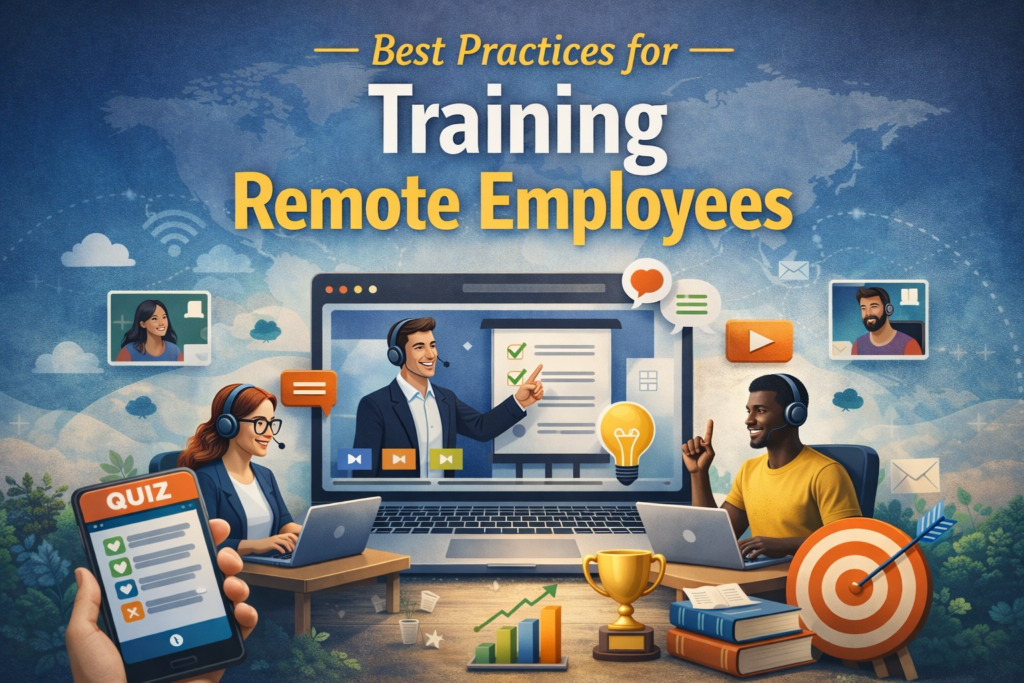
Remote work has reshaped how organizations operate, collaborate, and grow. While it offers flexibility and access to a broader talent pool, it also introduces new challenges, especially when it comes to training remote employees. Without the structure of in-person learning, companies must be more intentional in how they deliver training, measure progress, and keep employees engaged.
The organizations that get this right are building stronger, more connected, and more productive workforces.
1. Build a Structured and Scalable Training Program
Successful training remote employees starts with structure. Without a clear plan, remote training can quickly become inconsistent and ineffective.
Create a standardized onboarding and ongoing training process that includes:
- Defined learning paths
- Clear milestones and deadlines
- Role-specific training modules
A structured system ensures every employee receives the same high-quality experience, no matter where they are located.
Platforms like TalentLMS and Docebo demonstrate how structured digital learning environments can streamline training delivery and tracking.
At Fun Intended, tools like the The Fun Train help organizations centralize training, track completion rates, and ensure accountability across remote teams.
For more insights into building scalable systems, visit our Employee Engagement Services page and Fun Train LMS Platform.
2. Prioritize Engagement Through Interactive Learning
One of the biggest risks in training remote employees is disengagement. Without face-to-face interaction, employees can feel disconnected from the material.
To combat this:
- Use quizzes and knowledge checks
- Incorporate video-based learning
- Add gamification elements
- Encourage participation through discussions
According to research from Association for Talent Development, companies that invest in structured and engaging training programs see significantly higher employee engagement and retention rates.
You can also explore insights from Gallup, which consistently finds that engaged employees are more productive and less likely to leave.
Fun Intended integrates engagement directly into training through features found in Fun & Games and FunEngaged, helping reinforce learning while keeping employees motivated.
3. Set Clear Expectations and Communication Standards
When training remote employees, clarity is everything.
Without clear expectations:
- Employees may fall behind
- Training completion rates drop
- Performance gaps increase
Set expectations upfront by defining:
- Training timelines
- Required completion rates
- Communication channels for support
Regular check-ins help reinforce accountability and give employees a chance to ask questions.
For additional guidance on communication best practices, resources from Society for Human Resource Management provide valuable frameworks for managing remote teams effectively.
4. Leverage Data and Track Progress
You cannot improve what you do not measure.
Tracking progress is essential when training remote employees. A strong training program should provide visibility into:
- Completion rates
- Assessment scores
- Engagement levels
- Skill development trends
Modern platforms allow managers to quickly identify who is excelling and who may need additional support.
Fun Intended’s FunEngaged Dashboard brings all of this data into one place, allowing leadership teams to make informed decisions that improve both training outcomes and overall employee experience.
To learn more about how data drives engagement, visit our FunEngaged Dashboard page.
5. Reinforce Learning Through Mentorship and Collaboration
Training doesn’t end when a module is completed.
One of the most effective ways to strengthen training remote employees is by reinforcing learning through mentorship and collaboration.
Pair employees with mentors to:
- Provide guidance and real-world context
- Encourage continuous development
- Build stronger team connections
Research from Harvard Business Review shows that mentorship programs significantly improve employee confidence and long-term retention.
Fun Intended’s FunFluence Mentorship Platform helps organizations create structured mentorship programs that extend learning beyond formal training.
6. Make Training Continuous, Not One-Time
Training remote employees should never be treated as a one-time event.
The most successful companies:
- Continuously update training materials
- Offer ongoing skill development opportunities
- Align training with business goals
According to LinkedIn Learning, organizations that prioritize continuous learning are significantly more likely to retain top talent.
By embedding training into your company culture, you create a workforce that is always improving, adapting, and growing.
Conclusion: Training Remote Employees as a Growth Strategy
Training remote employees is not just an operational task. It is a strategic investment in your company’s future.
When done right, it leads to:
- Higher engagement
- Lower turnover
- Stronger performance
- Better alignment across teams
With the right structure, tools, and approach, remote training becomes more than effective. It becomes a competitive advantage.