
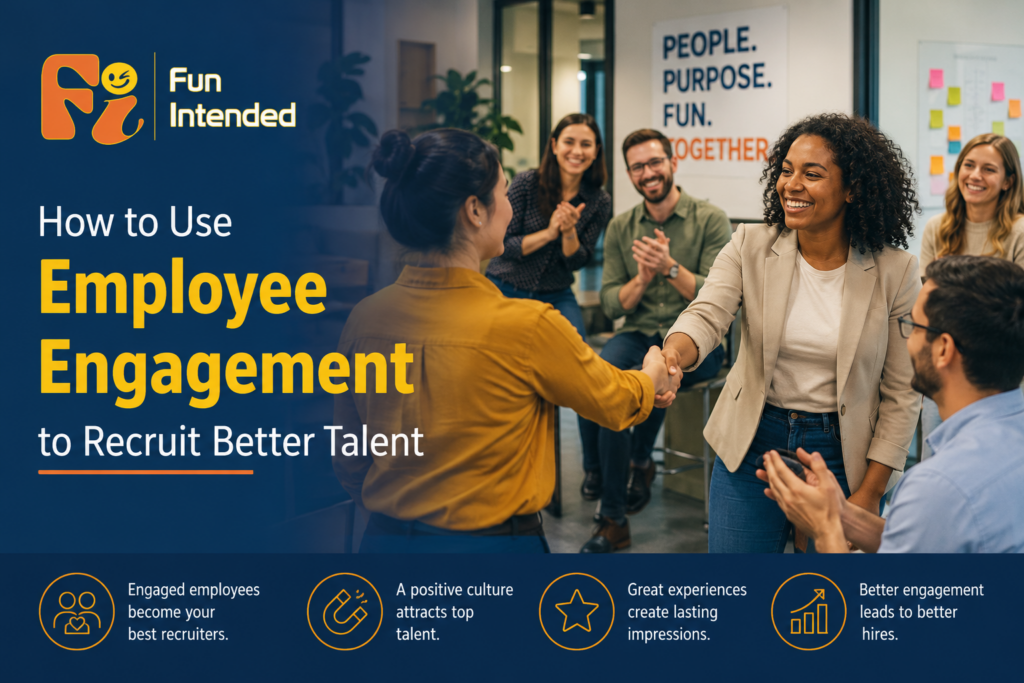
Most companies treat recruiting and employee engagement as two separate problems. One belongs to HR. The other belongs to leadership. They get different budgets, different strategies, and different owners. That separation is a mistake. Using employee engagement to recruit top quality talent is one of the smartest moves you can make.
The best talent in your industry is researching your company right now. Not waiting for a job posting to show up in their feed. Not relying on a recruiter’s pitch. They are reading what your current and former employees say about working there, and are asking people in their network what your culture is actually like.
86% of job seekers research company reviews and ratings before deciding where to apply. Your engagement strategy is your recruiting strategy. The only question is whether you are treating it that way.
Your Culture Is Already Being Advertised. You Just Don’t Control the Message.
Every organization has an employer brand. Most organizations did not build it intentionally.
It gets built by employees who talk about work at dinner, or by Glassdoor reviews written at 11pm by someone who felt invisible for two years. It gets built by LinkedIn posts from people who either love where they work or left and want others to know why.
75.6% of engaged employees consider themselves company ambassadors. They share positive experiences publicly, recommend their employer to talented friends, and speak with genuine enthusiasm in casual conversations that carry more weight than any job posting ever could.
Disengaged employees do the opposite. They vent, warn people away, and write reviews that live on the internet indefinitely and shape every candidate’s first impression of your organization.
A 2024 Forbes report found that 86% of job seekers research company reviews and ratings before deciding where to apply, and candidates also pay close attention to how companies respond to reviews. Roughly two-thirds say those responses influence how they evaluate an employer. Your online reputation is not a side project. It is the first page of your recruiting playbook.
The most cost-effective thing any organization can do to improve its recruiting pipeline is to improve the experience of the people already inside the building. Everything else follows from that.
Engaged Employees Are Your Most Credible Recruiters
No job description, however well written, competes with a genuine referral from someone a candidate trusts.
Engaged employees serve as brand ambassadors, positively shaping the company’s reputation both internally and externally. They show up to industry events and talk about their work with real enthusiasm, post about team wins on LinkedIn, and reach out directly to talented people in their network when a role opens up.
Employee referrals also tend to produce higher-quality hires. Referred candidates already have a realistic picture of the culture before their first interview. They come in with aligned expectations, which means lower early attrition and faster time to full productivity.
None of this happens by accident. It happens when employees feel genuinely valued, informed, and invested in the organization’s success. The connection is direct: build a workplace people are proud to be part of, and those people become a permanent recruiting advantage.
This is one of the reasons Fun Intended’s rewards and recognition platform creates value beyond retention. When employees are publicly celebrated for their contributions, those moments get shared. Other people see them. Some of those people are talented professionals who start to wonder what it would be like to work somewhere that treats its people that way.
What Top Talent Is Actually Looking For
Understanding what the best candidates prioritize changes how you think about building a recruiting pipeline.
81% of job seekers say company culture is important when considering a job. Culture consistently ranks ahead of perks, office aesthetics, and even certain compensation factors when candidates are choosing between opportunities. 73% of respondents in a survey of more than 2,000 workers across North America said they valued good company culture over money at work.
Top candidates also have options. They are not applying to every open role. They are selecting a short list of organizations worth their time, and that selection happens well before any recruiter reaches out.
73% of job seekers are passive candidates, meaning they are not actively searching but are open to the right opportunity. Reaching those people requires a visible culture, not just an active job board presence. They need to see, over time, that your organization is the kind of place they want to work. That impression gets built through employee stories, leadership communication, recognition moments, and the general reputation your culture creates in the market.
Career growth is another major factor. 45% of employees say they would stay at a company specifically because of career advancement opportunities. The same logic applies to recruiting. Candidates want to join organizations where they can see a clear path forward. A company with a visible career development framework signals to potential hires that growth is real, structured, and available to them from day one.
Fun Intended’s career development infrastructure is built around exactly this signal. When candidates can see that a company invests in learning pathways, mentorship, and advancement, the organization becomes more attractive at every stage of the talent decision.
How Morale Shows Up in Your Recruiting Process
High morale affects recruiting in ways that go beyond word-of-mouth.
It shows up in how your team shows up to interviews. Hiring managers who are genuinely enthusiastic about their organization communicate that energy to candidates. Employees who participate in panel interviews or meet-and-greets bring their real experience into the room. That authenticity is felt. Candidates pick up on the difference between a team that is performing engagement and a team that actually has it.
High morale also reduces the desperation factor in recruiting. Organizations with strong retention are not scrambling to fill seats. They can take their time, be selective, and hold out for candidates who are genuinely right for the role and the culture rather than filling a gap as fast as possible.
Low morale creates the opposite dynamic. Constant turnover creates constant pressure to hire fast. Hiring fast produces worse hires. Worse hires contribute to more turnover. The cycle compounds quickly and gets expensive. Hiring a new employee, combined with onboarding and training, can cost between 1.5 and 2 times that person’s annual salary. Investing in the culture that prevents that cycle is almost always cheaper than managing the cycle itself.
Making Your Culture Visible to the Outside World
Having a great culture is step one. Making it visible is step two. Both are required.
Candidates cannot choose a workplace they cannot see. Organizations that do the hard work of building genuine engagement and then fail to communicate it externally are leaving a significant recruiting advantage on the table.
A few practical ways to make your culture visible:
Share employee stories publicly. Genuine testimonials from real employees about their experience at your organization carry far more weight than marketing copy. LinkedIn posts, short video features, and employee spotlights on your careers page all contribute to the picture candidates are assembling before they apply.
Keep your review profiles active. Candidates read Glassdoor reviews closely. 70% of Glassdoor users say they are more likely to apply if the employer is active on the platform. Responding to reviews, both positive and critical, signals that leadership listens. That signal matters to candidates evaluating whether a company can be trusted.
Let your recognition culture be seen. Public recognition on platforms like LinkedIn is one of the most organic and credible forms of employer branding available. When a company celebrates an employee’s milestone, promotion, or contribution publicly, potential candidates see what it looks like to be valued there. Fun Intended’s FunEngaged platformconnects internal recognition to the external employer brand by creating a consistent, visible culture of appreciation that extends beyond the organization’s walls.
Communicate company direction openly. Candidates want to join organizations with a clear sense of where they are headed. Regular, transparent communication from leadership, through newsletters, social posts, and public content, signals that the company has direction and that employees are part of it.
The Flywheel Effect of High Engagement
Here is the thing about building a genuinely engaged workplace: the benefits compound.
Engagement improves retention. Retention builds institutional knowledge. Knowledge improves performance. Performance creates success stories. Success stories attract talent. New talent, properly onboarded into a strong culture, becomes engaged. And engagement improves retention again.
A workplace culture that prioritizes employee engagement attracts top talent because job seekers are drawn to organizations where they feel valued, supported, and empowered to excel. The flywheel spins faster the longer it runs.
The organizations that compete most effectively for talent are not necessarily the ones with the biggest recruiting budgets. They are the ones with the strongest cultures, the best reputations among their own employees, and the systems in place to make appreciation and growth visible at every level.
TAS United built exactly this kind of flywheel. After implementing a comprehensive engagement strategy through Fun Intended that included recognition, communication infrastructure, career development, and mentorship, the organization did not just reduce turnover. It built the kind of environment that makes recruiting easier, because the culture itself became a competitive advantage. Read the full case study here.
Where to Start
If your organization is spending more on recruiting than on the engagement that would make recruiting easier, the math deserves a closer look.
Start by asking what your current employees would say about your culture if a talented friend asked them directly. That answer, more than any job posting or recruiting campaign, determines the quality of your pipeline.
Build the recognition systems, communication habits, and development infrastructure that make that answer a strong one. Then make it visible. Let your culture speak for itself in every review, referral, and public moment of recognition.
Fun Intended’s employee engagement consulting helps organizations build the internal culture that makes external recruiting dramatically easier. The two are not separate problems. They are the same problem, solved at the source.
Ready to turn your employee engagement strategy into a recruiting advantage? Get in touch with Fun Intended and let’s talk about building a culture that attracts the talent you want.